
DELIVER Europe 2026: When Delivery Becomes a Driver for Growth and Differentiation
3 June 2026
Executive summary: Delivery has moved beyond operations and into the core of business performance. It shapes growth, signals trust and differentiates brands in increasingly competitive markets. Customers expect reliability, clarity and consistency as a given and react immediately when those expectations fail to be met. At DELIVER Europe 2026, one idea came through clearly: performance now depends on precision, visibility and the ability to anticipate demand. This changes the way delivery is evaluated. Cost remains a factor, but the real question shifts towards impact: can delivery unlock customer satisfaction, retention and growth? For logistics leaders, the challenge is to build systems that keep their promises at scale, while turning delivery into a true competitive advantage.
Why does delivery matter more when it stops being noticed?
There was a time when delivery could still impress. Next-day felt fast. Real-time tracking felt advanced. A smooth experience gave brands something to showcase. That moment has passed. Delivery has become a smooth and frictionless part of the e-shopping experience. When everything works, it barely registers. When something goes wrong, it reshapes the entire customer experience. That tension sat at the heart of this year’s DELIVER Europe in Amsterdam. The event brought together more than 2,000 decision-makers and 60 speakers across retail, e-commerce and supply chain. This is not an event built for observation. It is a space where conversations move quickly from insight to decision, and where commercial intent sits just beneath every exchange.
What is DELIVER Europe and why does it matter for logistics leaders?
DELIVER Europe has become a meeting point for retailers, e-commerce players and logistics operators who need to align quickly on what happens next. The value of the event comes from access and proximity, with decision-makers able to move from discussion to action in a matter of hours. In today’s environment highly influenced by growing complexity, the focus is shifting. Long-term plans can fall short due to unforeseen events. Leaders need to navigate short-term with greater agility, while taking the time to step back and engage in more strategic conversations. For us at Geopost, that context matters. DELIVER Europe unites the exact mix of partners, clients and prospects needed to turn visibility into commercial momentum for all our businesses across Europe, while also offering a stage to address a broader question: how to balance immediate operational pressures with the need to prepare for what comes next.
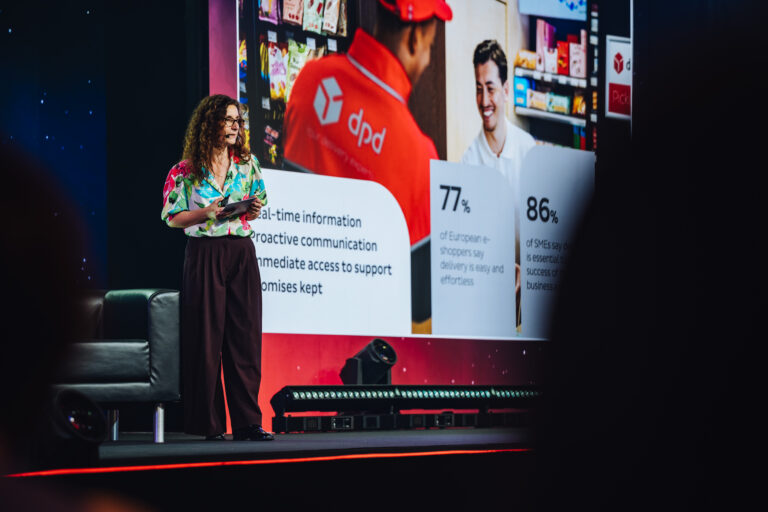
Carmen Cureu, Market Research Director, Geopost
What do customers really expect from delivery today?
Customer expectations have settled into a new pattern. Delivery works, and that has become the baseline. Today, 77% of European e‑shoppers describe delivery as easy and effortless. On paper, that signals maturity. In practice, it raises the bar. When ease becomes standard, tolerance disappears. Delivery now carries both emotional and rational weight. A missed time slot creates immediate frustration. A lack of visibility introduces doubt. A small failure feels disproportionate because it breaks what was assumed to be seamless. The shift is subtle but decisive. Customers no longer assess delivery as a feature. They react to it as a key moment.
What logistics trends are shaping delivery performance in 2026?
Speed still matters, but it no longer defines excellence on its own. A faster delivery that misses its promise creates more frustration than a slightly slower one that remains predictable. That dynamic moves attention towards precision, where clarity of commitment and reliability of execution take precedence. At Geopost, this shift is becoming increasingly visible in how we assess market trends through our future Business Barometer. Precision is taking priority because it allows teams and clients to organise with confidence. The expectation is clear: as one SME put it:
Tell me early and I can manage, surprise me and trust is broken.
This reflects a broader reality, with 86% of SMEs considering delivery essential to the success of their business. Customers expect to understand when a parcel will arrive and to trust that information without hesitation. Real-time delivery information now ranks as the most important criterion for e‑shoppers, reinforcing the role of visibility in shaping trust and satisfaction. In this environment, performance sits in the space between promise and delivery. The closer that alignment, the stronger the experience.
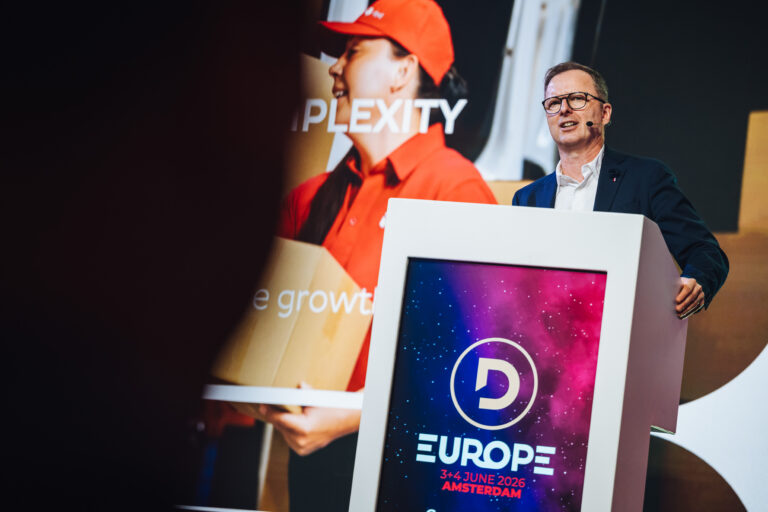
Franck Philippe, European Sales Director, Geopost
How is B2B delivery evolving across Europe?
The direction points towards anticipation. Businesses seek greater certainty in how flows are managed, with stronger emphasis on defining delivery windows and maintaining consistency across operations. Day-definite models form part of that shift, but the underlying objective goes further. Delivery becomes a component of the customer relationship. It influences satisfaction, retention and the overall perception of service quality. Operational reliability links directly to commercial value. This brings B2B expectations closer to those seen in B2C environments, while adding layers of scale and complexity that require more coordination across networks.