
Out-of-Home delivery: Thinking Outside the Box from Lithuania to Brazil
27 November 2025
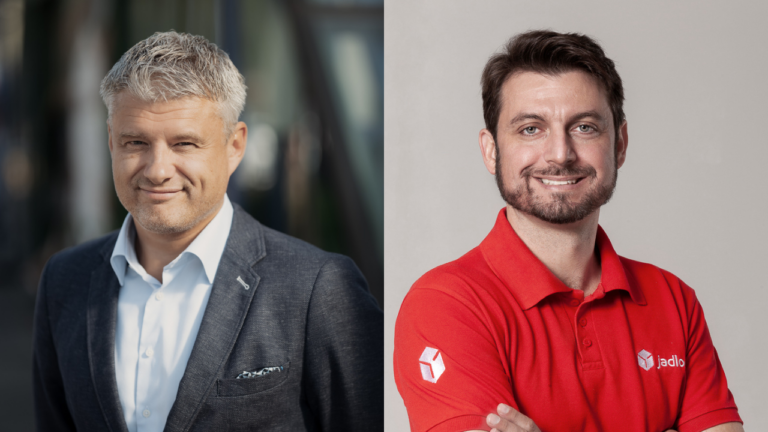
Gabrielius Bilevičius, Sales and Marketing Director, Baltics and Bruno Mazzoni Tortorello, CEO of JADLOG in Brazil
The success of any Out-of-Home (OOH) network depends on one thing above all: understanding the people it serves. Expert research1 shows that OOH delivery isn’t a turnkey solution. It’s shaped by local culture and everyday habits. To explore how culture defines OOH delivery success, we sat down with two business leaders from our own Geopost network: Bruno Mazzoni Tortorello, CEO of JADLOG in Brazil and Gabrielius Bilevičius, Sales and Marketing Director, Baltics.
From Lithuania’s “locker nation” to Brazil’s community-driven parcel shops, both leaders share a clear message: building a strong OOH network isn’t about rolling out a single model, but about adapting to geography, culture and local lifestyles in every market. With 57 000 employees worldwide and a multi-local network, Geopost is well positioned to serve local markets at best while providing a strong international added value.
The European automated parcel locker market is projected to grow at compound annual growth rate of 16.5% by 20311. Lithuania is clearly contributing to this success ౼ can you explain how?
Gabrielius Bilevičius: Growth in Lithuania has been remarkable. In 2018, we started out with just 20 lockers and, by the end of 2025 we’ll have more than 420 ౼ a notable achievement for a country of this size. And we are still expanding our network. Today, roughly 82% of parcels are delivered through lockers, nearly four times the EU average. Our success is tied to both culture and competition. For starters, Lithuanians are particularly comfortable with digital self-service; whether it’s e-government, self-service shopping, mobile banking, or e-commerce. This has led to what we call lietuviškas santūrumas, which translates to “Lithuanian restraint” and references a preference for independence and efficiency. Case in point: 59% of Lithuanians choose lockers specifically to avoid physical contact2.
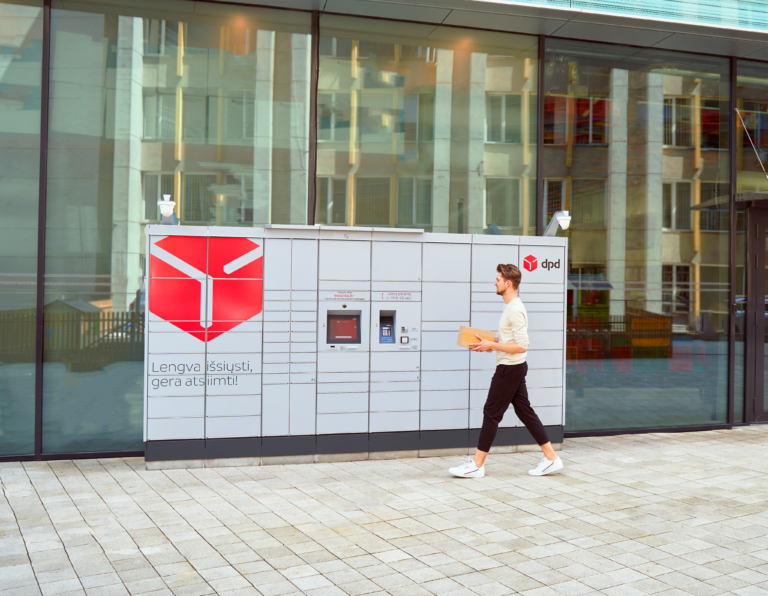
Competition among carriers also accelerated innovation. In recent years, multiple providers have expanded simultaneously. To stand out in this competitive landscape, OOH networks became fully automated, adding features like payments for goods (cash-on-delivery), returns, and label printing, all accessible around the clock.
Bruno, expert research shows that Brazil is one of the fastest growing markets in the world with 66.6 million e-consumers in 2024 and yet, the country is still emerging on the OOH scene3. Have you seen this firsthand while developing your OOH network?
Bruno Mazzoni Tortorello: Yes, OOH delivery is still quite new in Brazil. JADLOG was a pioneer when we launched our PUDO (Pick-Up, Drop-Off Point) network in 2017. At first, people didn’t understand why they should go somewhere to pick up a parcel when home delivery was already working quite well. Our first-attempt delivery success rate is around 96–97%, which is extremely high compared to Europe. We can explain this anomaly with one major cultural factor: in Brazil, there’s almost always someone at home ౼ a family member, a neighbour, or even a building manager.
“In Brazil, OOH delivery is still quite new. At first, people didn’t understand why they should go somewhere to pick up a parcel when home delivery was already working quite well.” - Bruno Mazzoni Tortorello, CEO of JADLOG
We started by focusing on drop-offs and reverse logistics. Only recently have we begun to see the number of customers opting to pick up their parcels grow, especially when major e-shopping markets add PUDO as a checkout option. This service model offers customers specific spots where they can easily pick up or drop off their packages. This part of the business, what we call “pick-ups”, still only represents roughly 5–10% of deliveries, but it’s rising fast.
Gabrielius, you mentioned Lithuania’s strong digital culture. Do you think that technology shapes consumer behaviour?
“Technology and reliability are both definitely central. The locker option is seamlessly integrated into the e-commerce checkout process ౼ and is often the default choice. It’s effortless.” ౼ Gabrielius Bilevičius Sales and Marketing Director, Baltics.
Yes, technology and reliability are both definitely central. The locker option is seamlessly integrated into the e-commerce checkout process ౼ and is often the default choice. It’s effortless
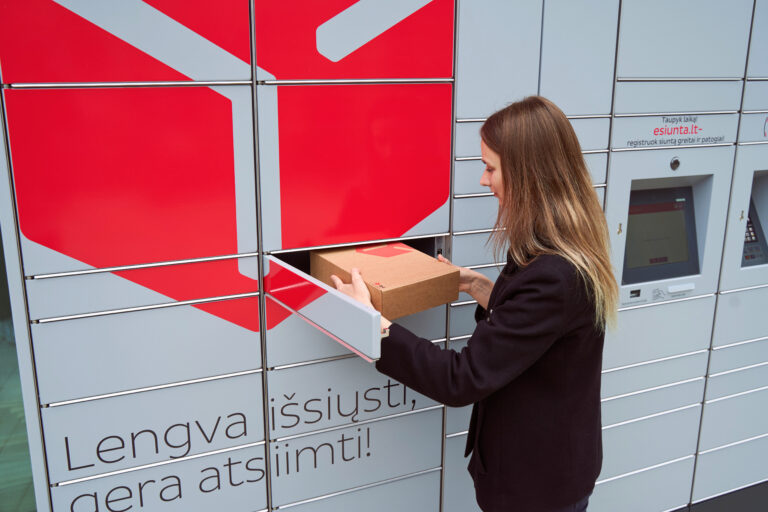
Here, lockers have even evolved into multi-functional micro-hubs. Customers can send parcels, return online orders, and even make payments. So, it’s more than OOH delivery, it’s a service ecosystem that fits into our lifestyle of independence, speed, and minimal contact.
Location is another major factor. Lockers are strategically placed in high-traffic areas: supermarkets, petrol stations, residential areas, and transportation hubs. And they’re available 24/7, which is crucial for people with busy schedules. For 76% of Lithuanians, the top priority is being able to collect parcels when it suits them, not when a courier arrives4.
In Brazil, your market sounds more relationship-based. Why do you think parcel shops have seen more success than lockers in Brazil?
B.M.T.: To put it simply, Brazilians love to talk! When people go to a parcel shop, they often chat with the shopkeeper, ask about other products, or simply enjoy that interaction. For many, a locker feels too impersonal.
So, our PUDOs, many of them small neighbourhood shops, fit in with the local culture. They’re not just about logistics; they’re social hubs. This human connection builds trust, especially in areas where people still prefer face-to-face exchanges.
The OOH delivery approach and cultural landscape of your two countries are so different. How do you both see these contrasts shaping your strategies?
Gabrielius Bilevičius: In Lithuania, independence and technology are valued, so automation feels natural. We strive to make OOH delivery seamless and to minimise friction as much as possible. In a country where people already trust digital platforms, the locker really is the most logical OOH solution. But that doesn't necessarily mean it will work elsewhere.
B.M.T.: Exactly. For us, it’s about evolution. We learned early on that trying to sell pick-up solutions directly didn’t work, there were too many cultural barriers. So, we started with drop-offs and returns, which were easier to adopt. Now, as people get used to that, I’m confident that pick-ups will follow.
Each country has to find its own entry point. For us, the social aspect and the human presence are key. Once people trust the system, we can gradually introduce more automation.
The growth of Brazil’s OOH network also seems tied to innovation. How important is that to scaling your network?
B.M.T.: Absolutely essential. Our reverse logistics solution, launched last year with a simple QR code, is now the best in the market. Before that, the only option was the national postal service, which was slow, expensive, and limited to office hours. Now customers can drop returns at any of our 3,500+ PUDOs, which are open longer and much more convenient. It’s also a big help for people who sell on marketplaces and need to drop off one, two, or three parcels per day.
“Each country has to find its own entry point. For us, the social aspect and the human presence are key.” - Bruno Mazzoni Tortorello, CEO of JADLOG
In the long term, I believe reverse will triple, and pick-up solutions will grow faster as marketplaces expand their integration. Amazon started it, and others will follow. But again, adoption must be organic ౼ it has to make sense for customers’ habits.
Lithuania’s locker boom is a bit of a European success story. What lessons could other markets learn from your experience?
Gabrielius Bilevičius: The most important lesson is that OOH delivery must be locally relevant. You can have the best technology, but without reliability, trust and convenience, it won’t work.
“You can have the best technology, but without reliability, trust and convenience, it won’t work.” ౼ Gabrielius Bilevičius, Sales and Marketing Director, Baltics.
In Lithuania, we didn’t just install lockers; we embedded them into people’s daily routines. They operate 24/7, even on holidays, and are located near places people visit often. Payments for goods and parcel sending are seamlessly integrated into self-service apps or can be made directly at the locker.
Both of you highlight the importance of human behaviour in shaping the adoption of OOH solutions. How do you see the future of OOH delivery evolving in your markets?
Gabrielius Bilevičius: For Lithuania, the next step is sustainability and diversification. We’re integrating electric vehicles for first- and last-mile delivery and expanding lockers into smaller towns.
B.M.T.: In Brazil, I really believe that we’re starting to build a new culture. We’re teaching customers that OOH delivery can be just as convenient as home delivery, maybe even more flexible. I think parcel shops will remain dominant, but we’ll also start to see more diverse variations like extended service hours or lockers inside of parcel shops.
Discover how OOH delivery is reshaping urban landscapes and public spaces
Note: In preparation for this interview, we spoke with Professor Leise Kelli de Oliveira from Federal University of Rio Grande do Sul Porto Alegre in Brazil. With research expertise in urban freight transport, city logistics and urban mobility she was able to shine some light on the important role that culture plays in delivery logistics.
2 - 3. The Rise of Lockerland: How the Boom Happened in Lithuania. DPD Lithuania 2025.