Out-of-home Delivery Beyond Lockers: Why Hybrid Is Becoming the Reference Model

27 May 2026
As the industry prepares to gather at DELIVER Europe in Amsterdam this June, one question sits at the centre of the conversation: how should out-of-home delivery evolve as e-commerce continues to scale across Europe?  

The answer lies in the growing diversity of delivery expectations. Consumers want choice, businesses need efficiency and networks must adapt to local realities. In this opinion piece, Hervé Crochet, Head of Sales at Geopost, shares his perspective on why out-of-home delivery is moving beyond lockers alone and why a hybrid model combining home delivery, parcel shops and lockers is increasingly shaping the next phase of last-mile logistics. 

ooh

Hybrid delivery starts with choice 

For me, hybrid delivery is fundamentally about adapting to e-buyers preferences. Delivery preferences vary widely depending on generation, culture and country. In Germany, for example, Gen Z consumers tend to favour parcel lockers, while older generations remain more attached to home delivery. 

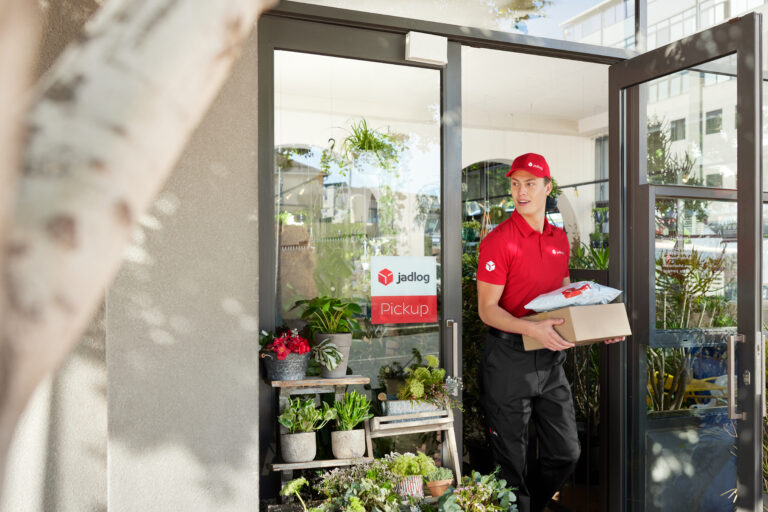
Out-of-home (OOH) delivery also increasingly extends beyond traditional B2C retail such as fashion or high-tech. It now supports both B2C and B2B flows across a growing range of sectors including pet food, home accessories, social selling, construction and maintenance. In France, over 20% of pet food deliveries already go through out-of-home points, rising to more than 30% in Poland. OOH models make parcel drop-off and pickup easier and more cost-effective for these use cases. Parcel shops and lockers are complementary: lockers offer extended availability and ease of access, while parcel shops provide added flexibility for larger parcels and can absorb additional volumes during peak periods. 


A powerful enabler of C2C and cross-border trade 

Geopost connects 28 countries with Out-of-Home (OOH) solutions, acting as a major enabler of consumer-to-consumer exchanges and international trade. Digital labelling and personalised online journeys further simplify the experience. 

As C2C volumes grow, they accelerate adoption of OOH delivery for both C2C and traditional B2C flows. This dynamic reinforces itself, creating a virtuous cycle driven by flexibility and convenience. OOH networks also play a key role in cross-border trade, through the returns capabilities they offer, as well as greater convenence and cost efficiency. 

c

Adapting the hybrid model to local needs 

One of the main challenges of hybrid delivery is finding the right balance between parcel shops and lockers. Yet this challenge also represents its greatest opportunity. 

Today, 32% of European SMEs consider parcel shop or locker delivery very important. Among SMEs in Central and Eastern Europe, this figure reaches 41%1. To ensure a balance between parcel shops and lockers, we employ a hybrid network approach.  

Geopost operates one of the largest OOH networks in Europe, with more than 160,000 Pickup points. We plan to continue expanding this network, with a strong focus on lockers and a long-term ambition of achieving a balanced split between lockers and parcel shops. These developments are driven both by the growth of our own network and  by strategic partnerships in countries such as the Netherlands, Germany and the Czech Republic, and are always aligned with local consumer behaviour. In my experience, consumer preferences remain the most reliable indicator of sustainable growth. 

Rather than applying a single blueprint, we develop our out-of-home network around local relevance. Our experience from Lithuania to Brazil shows how the same hybrid model can be adapted to very different market needs2. 

Technology designed around the user 

Technology plays a critical role in making hybrid delivery intuitive and user-centric. Our strategy relies on data-driven solutions, particularly around tracking and delivery choice. 

The myDPD app, already used by 40 million registered consumers across Europe, allows recipients to access real-time information and make in-flight changes to their deliveries. It gives e-shoppers greater control while opening the door to future value-added services, including targeted offers for SMEs. 

Data also helps us optimise locker placement, pickup times and incentives. Artificial intelligence strengthens these capabilities by improving forecasting and anticipation. In a recent UK pilot, AI-supported forecasting reached close to 99% accuracy. AI is also being deployed through chatbots and automated mail solutions to support faster, more accurate and more proactive customer service. 


How the hybrid delivery model continues to evolve 

Our hybrid delivery model evolves through a test-and-learn approach. We are currently  in exploring several modular solutions designed to respond to concrete operational needs. 

These include autonomous robot lockers tested in UK residential areas for home and OOH deliveries and returns, solar-powered lockers to reduce reliance on external electricity and lower installation costs, fresh compartment lockers piloted in France to manage temperature-controlled goods, and portable lockers made possible by lighter, battery-powered technologies for temporary locations such as construction sites. 

Parcel shops are also evolving. Multi-service formats can integrate fitting rooms, easy returns and additional conveniences, further embedding OOH delivery into daily consumer routines.  

)seur

Sustainability as a structural requirement 

Sustainability is central to the future of hybrid delivery. At Geopost, our ambition to reach net-zero emissions by 2040 reflects strong expectations from both consumers and businesses. 

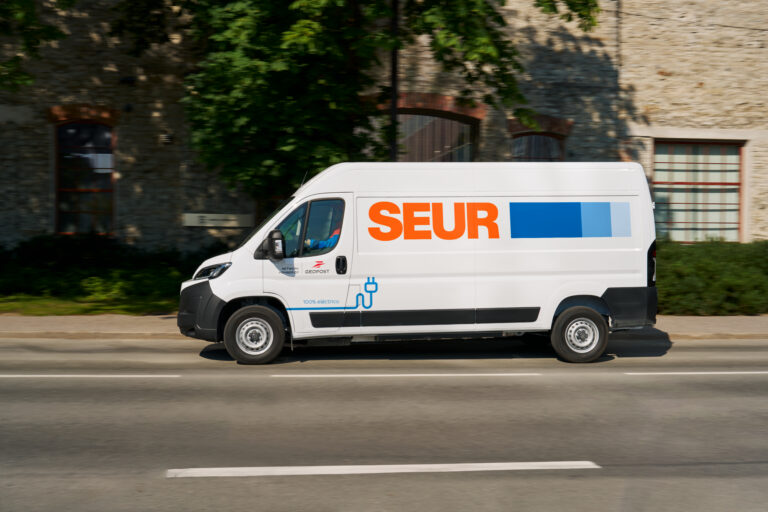
This translates into concrete actions across our main impact areas: first- and last-mile delivery through electrification and low-carbon vehicles, linehaul through initiatives such as Climate Group’s EV100+, and buildings through smarter energy management and increased use of solar solutions. Between 2024 and 2025, we reduced net greenhouse gas emissions by 1.6%3. 

Digital tools also support this effort. Our Carbon Calculator, accredited by the Smart Freight Centre, enables real-time tracking of shipment emissions in line with international standards and helps customers actively manage their carbon footprint. OOH delivery contributes further when parcels are collected as part of existing journeys rather than through dedicated trips. 


Looking ahead 

The future of delivery is undeniably hybrid. Home delivery, parcel shops and parcel lockers, as well as innovative new models will continue to coexist and converge. 

Our objective is to create delivery experiences where the distinction between home and Out-Of-Home gradually becomes less relevant. What matters most is that all options are accessible through simple, digital tools that respect local needs and individual choices. 

Data will remain a key driver of this evolution, helping us anticipate changing behaviours, optimise networks and improve convenience while remaining cost-effective and sustainable. 

These are also the topics we look forward to discussing at DELIVER Europe 2026 in Amsterdam, where industry leaders will continue to explore how hybrid delivery models can scale with local relevance and measurable impact. 


Check out the latest insights from our e-shopper barometer! 

 

herve

Hervé Crochet


Sources

 1. 2B Recipient Barometer 

2. Out-of-Home delivery: Thinking Outside the Box from Lithuania to Brazil

 3. 2024 Geopost Sustainability Report